Adobe Cs3 Design Premium
| Developer(s) | Adobe Systems |
|---|---|
| Initial release | September 1, 2003; 16 years ago |
| Final release | |
| Operating system | Windows, OS X |
| Platform | IA-32 (limited), PowerPC (limited), x86-64 |
| Type | Digital media creation and editing |
| License | Proprietary |
| Website | www.adobe.com/products/cs6.html |
Adobe Creative Suite (CS) is a now-discontinued software suite of graphic design, video editing, and web developmentapplications developed by Adobe Systems. Each edition consisted of several Adobe applications, e.g., Photoshop, Acrobat, Premiere Pro or After Effects, InDesign, and Illustrator that are the industry standard applications for many graphic design positions.
The last of the Creative Suite versions, Adobe Creative Suite 6 (CS6), was launched at a release event on April 23, 2012, and released on May 7, 2012.[1] CS6 was the last of the Adobe design tools to be physically shipped as boxed software as future releases and updates would be delivered via download only.
On May 6, 2013 Adobe announced that CS6 would be the last version of the Creative Suite,[2][3][4] and that future versions of their creative software would only be available via their Adobe Creative Cloud subscription model. Adobe also announced that it would continue to support CS6 and would provide bug fixes and security updates through the next major upgrades of both Mac and Windows operating systems (as of 2013).[5] The Creative Suite packages were pulled from Adobe's online store in 2013,[6] but were still available on their website until January 2017.[7]
- 3History
- 3.6Creative Suite 5
Applications[edit]
Adobe Creative Suite 3 Design Premium What’s New Make the most of agile workflows—Use Design Premium to enjoy more efficient print workflows and also explore the latest workflows for web, interactive, and mobile design. This article will be both an overview and a basic analysis of Adobe's CS3 Web Premium and Design Premium packages. This will be followed by individual reviews of the products. Here I will discuss the products that comprise Design Premium and Web Premium and how they interact with each other.
The following are brief description of the core applications in the various Adobe Creative Suite editions. Each edition may come with all or subset of these apps.
- Adobe Acrobat creates, edits and manages documents in Portable Document Format (PDF).
- Adobe After Effects is a digital motion graphics and compositing software published by Adobe Systems. It is often used in film and video post-production.
- Adobe Audition is a digital audio editor. It has more editing features than its discontinued sibling, Adobe Soundbooth.
- Adobe Bridge is an image organizer and digital asset management app. It features limited integration with other Adobe apps but has no editing capabilities of its own.
- Adobe Contribute is an HTML editor and a content management system. It allows a wide variety of people within an organization to update web pages.
- Adobe Device Central helps preview and test web pages, raster image and digital video content for mobile devices.
- Adobe Dreamweaver is an HTML editor geared towards professional web development.
- Adobe Dynamic Link integrates After Effects with Premiere Pro and with Encore, allowing files to be transferred between the two without rerendering.
- Adobe Encore is a specialized DVD authoring app; it converts the output of Adobe Premiere and Adobe After Effects to a format suitable for DVD and Blu-ray players. Files are automatically transcoded to MPEG-2 or H.264/MPEG-4 AVC video and Dolby Digital audio. DVD and Blu-ray menus can be created and edited in Adobe Photoshop using layering techniques.
- Adobe Fireworks is a discontinued raster graphics editor for web designers. It could create interactive contents (e.g. buttons that change shape when the mouse cursor is hovered on) and animations.
- Adobe Flash Professional (now Adobe Animate as part of Creative Cloud), a multimedia authoring program used to create web apps, flash games, films and mobile widgets in the eponymous Adobe Flash format. Its features included a scripting language called ActionScript and bi-directional streaming of digital audio and video.
- Adobe Flash Catalyst, an interaction design tool that allowed users to transform Adobe Photoshop, Illustrator, and Fireworks artwork into interactive Adobe Flash projects without writing code. Flash Catalyst was discontinued in 2012 (CS 5.5) and not included in CS 6.
- Adobe Flash Builder, formerly Adobe Flex Builder, is an integrated development environment (IDE) built on the Eclipse platform meant for developing rich Internet applications and cross-platform desktop applications in the Adobe Flash format.
- Adobe GoLive is a discontinued HTML editor geared towards professional web development. It was discontinued in favor of Adobe Dreamweaver.
- Adobe Illustrator is a vector graphics illustration and design tool.
- Adobe ImageReady is a discontinued raster graphics editor for web designers. It was discontinued in favor of Fireworks.
- Adobe InDesign is a desktop publishing application.
- Adobe Media Encoder is a transcoding app made with Adobe Premiere Pro and Adobe After Effects users in mind. It produces video files suitable for uploading to video sharing services (including YouTube) and social networks. It is freeware.
- Adobe OnLocation is a direct-to-disk recording and monitoring software.
- Adobe Prelude is a tool for importing (ingesting), reviewing, and logging tapeless media.
- Adobe Photoshop is a raster graphics editor. A large portion of its features are geared towards editing and retouching digital photographs. However, it is also capable of editing digital video frames, rendering text, 3D modeling and developing contents for web.
- Adobe Premiere Pro is a real-time, timeline-based video editing app. Premiere is optimized for working on computers with more than one CPU, graphic cards and computer monitors. It supports the contemporary digital camera and capture card feeds, as well as their file formats, as input.
- Adobe Soundbooth is a discontinued digital audio editor. It had fewer capabilities than Adobe Audition and eventually became a part of Audition.
- Adobe SpeedGrade is a color grading app that integrates with Adobe Premiere
- Adobe Story is a screenwriting, production scheduling and reporting app.
- Adobe Ultra is a discontinued chroma key compositing app; it removes the background of video usually recorded on a blue or green screen and combines it with another video background. Adobe Ultra was only available in the CS3 package. It is later incorporated into Adobe Premiere Elements and Adobe Visual Communicator. Later versions Adobe Premiere Pro and Adobe After Effects have built-in chroma key compositing features.
- Adobe Version Cue is a revision control system for maintaining multiple revisions of works among teams.
Applications in the Creative Suite family were capable of accessing a stock photography service called Adobe Stock Photos before the service was discontinued in 2008.[8] In 2015, after acquiring microstock company Fotolia, Adobe once again launched a stock photography service called Adobe Stock along with its Creative Cloud service.[9][10][11]
Editions[edit]
Adobe sold Creative Suite applications in several different combinations called 'editions', these included:
- Adobe Creative Suite 6 Design Standard is an edition of the Adobe Creative Suite 6 family of products intended for professional print, web, interactive and mobile designers.
- Adobe Creative Suite 6 Design & Web Premium is an edition of the Adobe Creative Suite 6 family of products intended for professional web designers and developers.
- Adobe Creative Suite 6 Production Premium is an edition of the Adobe Creative Suite 6 family of products intended for professional rich media and video post-production experts who create projects for film, video, broadcast, web, DVD, Blu-ray Disc, and mobile devices.
- Adobe Creative Suite 6 Master Collection contains applications from all of the above editions
Adobe Flash Catalyst, Adobe Contribute, Adobe OnLocation, and Adobe Device Central, previously available in CS5.5, have been dropped from the CS6 line-up. Adobe Prelude and Adobe Encore are not released as standalone products. Adobe Encore is available as part of Adobe Premiere Pro. Adobe InCopy, a word processing application that integrates with Adobe InDesign, is also part of the Creative Suite family, but is not included in any CS6 edition.
In March 2013, it was reported that Adobe will no longer sell boxed copies of the Creative Suite software, instead offering digital downloads and monthly subscriptions.[12]
History[edit]
Creative Suite 1 and 2[edit]
The first version of Adobe Creative Suite was released in September 2003[13] and Creative Suite 2 in April 2005.[14] The first two versions (CS and CS2) were available in two editions.
The Standard Edition included:
- Adobe Bridge (Since CS2)
- Adobe Version Cue
- Design guide and training resources
- Adobe Stock Photos
The Premium Edition also included:
- Adobe Acrobat Professional (Version 8 in CS2.3)
- Adobe Dreamweaver (Since CS2.3)[15]
Creative Suite likely helped InDesign become the dominant publishing software, replacing QuarkXPress, because customers that purchased the suite for Photoshop and Illustrator received InDesign for free.[16]
Due to Adobe's closing of the CS2 activation servers on December 15, 2012, Adobe offered existing CS2 users the opportunity to download a version of CS2 that no longer required Adobe server authorization[17] in January 2013. This release was intended to allow existing users of CS2 to reinstall their licensed copies without needing authorization from the now-closed servers.[18] Adobe published serial numbers on the January 8, 2013,[19] but it was not until the January 24, 2013, that Adobe announced that download was intended only for people who had 'legitimately purchased CS2'.[20] Many users ignored this announcement, or were not aware of it, and continued treating CS2 as either freeware or abandonware.[21]
Creative Suite Production Studio[edit]
Adobe Creative Suite Production Studio (previously Adobe Video Collection) was a suite of programs for acquiring, editing, and distributing digital video and audio that was released during the same timeframe as Adobe Creative Suite 2. The suite was available in standard and premium editions.
The Adobe Production Studio Premium edition consisted of:
- Adobe After Effects Professional
- Adobe Dynamic Link (Not sold separately)
The Standard edition consisted of:
Since CS3, Adobe Production Studio became part of the Creative Suite family. The equivalent version for Production Studio Premium is the Adobe Creative Suite Production Premium.

Macromedia Studio[edit]
Macromedia Studio was a suite of programs designed for web content creation designed and distributed by Macromedia. After Adobe's 2005 acquisition of Macromedia, Macromedia Studio 8 was replaced, modified, and integrated into two editions of the Adobe Creative Suite family of software from version 2.3 onwards. The closest relatives of Macromedia Studio 8 are now called Adobe Creative Suite Web Premium.
Core applications from Macromedia Studio have been merged with Adobe Creative Suite since CS3, including Flash, Dreamweaver, and Fireworks. Some Macromedia applications were absorbed into existing Adobe products, e.g. FreeHand has been replaced with Adobe Illustrator. Director and ColdFusion are not part of Adobe Creative Suite and will only be available as standalone products. The final version of Macromedia Studio released include:
- Macromedia Studio MX Released May 29, 2002, internally it was version 6 and the first incarnation of the studio to use the 'MX' suffix, which for marketing purposes was a shorthand abbreviation that meant 'Maximize'. Studio MX included Dreamweaver, Flash, FreeHand, Fireworks and a developer edition of ColdFusion.
- Macromedia Studio MX Plus Released February 10, 2003, sometimes referred to as MX 1.1. MX Plus was a special edition release of MX that included Freehand MX (replacing Freehand 10), Contribute and DevNet Resource Kit Special Edition in addition to the existing MX suite of products.
- Macromedia Studio MX 2004 Released September 10, 2003, despite its name, it is internally version 7. Studio MX 2004 included FreeHand along with updated versions of Dreamweaver, Flash and Fireworks. An alternate version of Studio MX 2004 included Flash Professional and a new interface for Dreamweaver.
- Macromedia Studio 8 Released September 13, 2005, Studio 8 was the last version of Macromedia Studio. It comprised Dreamweaver 8, Flash 8, Flash 8 Video Converter, Fireworks 8, Contribute 3 and FlashPaper.
Creative Suite 3[edit]
Adobe Creative Suite 3 (CS3) was announced on March 27, 2007; it introduced universal binaries for all major programs for the Apple Macintosh,[22] as well as including all of the core applications from Macromedia Studio and Production Studio.
Some Creative Suite programs also began using the Prestolayout engine used in the Operaweb browser.[23]
Adobe began selling CS3 applications in six different combinations called 'editions.' Design Standard & Premium and Web Standard & Premium began shipping on April 16, 2007, and Production Premium and Master Collection editions began shipping on July 2, 2007. The latest released CS3 version was version 3.3, released on June 2, 2008. In this version Fireworks CS3 was included in Design Premium and all editions that had included Acrobat 8 Pro had it replaced with Acrobat 9 Pro.[24] Below is a matrix of the applications included in each edition of CS3 version 3.3:
| Adobe Creative Suite 3 | ||||||
|---|---|---|---|---|---|---|
| Software | Design | Web | Production Premium | Master Collection | ||
| Standard | Premium | Standard | Premium | |||
| Photoshop CS3 | ||||||
| Photoshop CS3 Extended | ||||||
| Illustrator CS3 | ||||||
| InDesign CS3 | ||||||
| Acrobat 8 Pro | ||||||
| Flash CS3 Professional | ||||||
| Dreamweaver CS3 | ||||||
| Fireworks CS3 | (in v3.3) | |||||
| Contribute CS3 | ||||||
| Soundbooth CS3 | ||||||
| After Effects CS3 Professional | ||||||
| Premiere Pro CS3 | ||||||
| Encore CS3 | ||||||
| Shared applications | ||||||
| OnLocation CS3(Windows only) | ||||||
| Ultra CS3(Windows only) | ||||||
| Bridge CS3 | ||||||
| Device Central CS3 | ||||||
| Stock Photos | ||||||
| Version Cue CS3 | ||||||
CS3 included several programs, including Dreamweaver, Flash, and Fireworks that were developed by Macromedia, a former rival acquired by Adobe in 2005. It also included Adobe OnLocation and Adobe Ultra that were developed by Serious Magic, also a firm acquired by Adobe in 2006.
Adobe dropped the following programs (that were previously included in CS2) from the CS3 software bundles:[25]
- Adobe GoLive(replaced by Adobe Dreamweaver)
- Adobe ImageReady(merged into Adobe Photoshop and replaced by Adobe Fireworks)
- Adobe Audition(replaced by Adobe Soundbooth)
Adobe had announced that it would continue to develop Audition as a standalone product, while GoLive had been discontinued. Adobe GoLive 9 was released as a standalone product on June 10, 2007. Adobe Audition 3 was announced as a standalone product on September 6, 2007. Adobe had discontinued ImageReady and had replaced it with Fireworks, with some of ImageReady's features integrated into Photoshop. Audition became part of the Creative Suite again in CS5.5 when Soundbooth was discontinued.
Creative Suite 4[edit]
Adobe Creative Suite 4 (CS4) was announced on September 23, 2008 and officially released on October 15, 2008.[26] All applications in CS4 featured the same user interface, with a new tabbed interface for working with concurrently running Adobe CS4 programs where multiple documents can be opened inside multiple tabs contained in a single window.[27]
Adobe CS4 was also developed to perform better under 64-bit and multi-core processors. On MS Windows, Adobe Photoshop CS4 ran natively as a 64-bit application. Although they were not natively 64-bit applications, Adobe After Effects CS4 and Adobe Premiere Pro CS4 had been optimized for 64-bit computers.[28] However, there were no 64-bit versions of CS4 available for Mac OS X.[29] In early testing of 64-bit support in Adobe Photoshop CS4, overall performance gains ranged from 8% to 12%, due to the fact that 64-bit applications could address larger amounts of memory and thus resulted in less file swapping — one of the biggest factors that can affect data processing speed.[30]
Two programs were dropped from the CS4 line-up: Adobe Ultra, a vector keying application which utilizes image analysis technology to produce high quality chroma key effects in less than ideal lighting environments and provides keying of a subject into a virtual 3D environment through virtual set technology, and Adobe Stock Photos. Below is a matrix of the applications that were bundled in each of the software suites for CS4:
| Adobe Creative Suite 4 | ||||||
|---|---|---|---|---|---|---|
| Software | Design | Web | Production Premium | Master Collection | ||
| Standard | Premium | Standard | Premium | |||
| Photoshop CS4 | ||||||
| Photoshop CS4 Extended | ||||||
| Illustrator CS4 | ||||||
| InDesign CS4 | ||||||
| Acrobat 9 Pro | ||||||
| Flash CS4 Professional | ||||||
| Dreamweaver CS4 | ||||||
| Fireworks CS4 | ||||||
| Contribute CS4 | ||||||
| Soundbooth CS4 | ||||||
| After Effects CS4 | ||||||
| Premiere Pro CS4 | ||||||
| OnLocation CS4 | ||||||
| Encore CS4 | ||||||
| Shared features, services, and applications | ||||||
| Bridge CS4 | ||||||
| Device Central CS4 | ||||||
| Version Cue CS4 | ||||||
| Dynamic Link | ||||||
Creative Suite 5[edit]
Adobe Creative Suite 5 (CS5) was released on April 30, 2010.[31] From CS5 onwards, Windows versions of Adobe Premiere CS5 and Adobe After Effects CS5 were 64-bit only and required at least Windows Vista 64-bit or a later 64-bit Windows version.[32] Windows XP Professional x64 Edition was no longer supported. Adobe Version Cue, an application that enabled users to track and manipulate file metadata and automate the process of collaboratively reviewing documents among groups of people, and the Adobe Creative Suite Web Standard edition, previously available in CS4, were dropped from the CS5 line-up. Below is a matrix of the applications that were bundled in each of the software suites for CS5:
| Adobe Creative Suite 5 | ||||||
|---|---|---|---|---|---|---|
| Software | Design | Web Premium | Production Premium | Master Collection | ||
| Standard | Premium | |||||
| Photoshop CS5 | ||||||
| Photoshop CS5 Extended | ||||||
| Illustrator CS5 | ||||||
| InDesign CS5 | ||||||
| Acrobat 9.3 Pro | ||||||
| Flash Catalyst CS5 | ||||||
| Flash Professional CS5 | ||||||
| Flash Builder 4 Standard | ||||||
| Dreamweaver CS5 | ||||||
| Fireworks CS5 | ||||||
| Contribute CS5 | ||||||
| Premiere Pro CS5 | ||||||
| OnLocation CS5 | ||||||
| Encore CS5 | ||||||
| After Effects CS5 | ||||||
| Soundbooth CS5 | ||||||
| Shared features, services, and applications | ||||||
| Bridge CS5 | ||||||
| Device Central CS5 | ||||||
| CS Live | ||||||
| Dynamic Link | ||||||
Creative Suite 5.5[edit]
Following the release of CS5 in April 2010, Adobe changed its release strategy to an every other year release of major number installments. CS5.5 was presented on April 12, 2011, as an in-between program until CS6. The update helped developers optimize websites for a variety of tablets, smart phones, and other devices. At the same time, Adobe announced a subscription-based pay service as an alternative to full purchase.[33] On July 1, 2011, Adobe Systems announced its Switcher Program, which will allow people who had purchased any version of Apple's Final Cut Pro (or Avid Media Composer) to receive a 50 percent discount on Creative Suite CS5.5 Production Premium or Premiere Pro CS5.5.[34]
Not all products were upgraded to CS5.5 in this release; applications that were upgraded to CS5.5 included Adobe InDesign, Adobe Flash Catalyst, Adobe Flash Professional, Adobe Dreamweaver, Adobe Premiere Pro, Adobe After Effects, and Adobe Device Central. Adobe Audition also replaced Adobe Soundbooth in CS5.5, Adobe Story was first offered as an AIR-powered screenwriting and preproduction application, and Adobe Acrobat X Pro replaced Acrobat 9.3 Pro. Below is a matrix of the applications that were bundled in each of the software suites for CS5.5:
| Adobe Creative Suite 5.5 | ||||||
|---|---|---|---|---|---|---|
| Software | Design | Web Premium | Production Premium | Master Collection | ||
| Standard | Premium | |||||
| Photoshop CS5 | ||||||
| Photoshop CS5 Extended | ||||||
| Illustrator CS5 | ||||||
| InDesign CS5.5 | ||||||
| Acrobat X Pro | ||||||
| Flash Catalyst CS5.5 | ||||||
| Flash Professional CS5.5 | ||||||
| Flash Builder 4.5 Premium Edition | ||||||
| Dreamweaver CS5.5 | ||||||
| Fireworks CS5 | ||||||
| Contribute CS5 | ||||||
| Premiere Pro CS5.5 | ||||||
| OnLocation CS5 | ||||||
| Encore CS5 | ||||||
| After Effects CS5.5 | ||||||
| Audition CS5.5 | ||||||
| Shared features, services, and applications | ||||||
| Bridge CS5 | ||||||
| Device Central CS5.5 | ||||||
| Dynamic Link | ||||||
| Extension Manager CS5.5 | ||||||
| ExtendScript Toolkit CS5.5 | ||||||
| Media Encoder CS5.5 | ||||||
| Extension Manager CS5.5 | ||||||
| Story CS5.5 | ||||||
Creative Suite 6[edit]
During an Adobe conference call on June 21, 2011, CEO Shantanu Narayen said that the April 2011 launch of CS5.5 was 'the first release in our transition to an annual release cycle', adding, 'We intend to ship the next milestone release of Creative Suite in 2012.'[35] On March 21, 2012, Adobe released a freely available beta version of Adobe Photoshop CS6.[36] The final version of Adobe CS6 was launched on a release event April 23, 2012,[37] and first shipped May 7.[1] Adobe also launched a subscription-based offering named Adobe Creative Cloud where users are able to gain access to individual applications or the full Adobe Creative Suite 6 suite on a per-month basis, plus additional cloud storage spaces and services.[38]
| Adobe Creative Suite 6 | ||||||
|---|---|---|---|---|---|---|
| Software | Design Standard | Design & Web Premium | Production Premium | Master Collection | ||
| Photoshop CS6 | ||||||
| Photoshop CS6 Extended | ||||||
| Illustrator CS6 | ||||||
| InDesign CS6 | ||||||
| Acrobat X Pro | ||||||
| Flash Professional CS6 | ||||||
| Flash Builder 4.6 Premium Edition | ||||||
| Dreamweaver CS6 | ||||||
| Fireworks CS6 | ||||||
| Premiere Pro CS6 | ||||||
| OnLocation CS6 | ||||||
| Encore CS6 | ||||||
| After Effects CS6 | ||||||
| Audition CS6 | ||||||
| SpeedGrade CS6 | ||||||
| Prelude CS6 | ||||||
| Shared features, services, and applications | ||||||
| Bridge CS6 | ||||||
| Media Encoder CS6 | ||||||
| Dynamic Link | ||||||
| Extension Manager CS6 | ||||||
| Extension Toolkit CS6 | ||||||
| Story Plus CS6 | ||||||
Discontinuation[edit]
On May 5, 2013, during the opening keynote of its Adobe MAX conference, Adobe announced that it was retiring the 'Creative Suite' branding in favor of 'Creative Cloud', and making all future feature updates to its software (now appended with 'CC' instead of 'CS', e.g. Photoshop CC) available via the Creative Cloud subscription service rather than through the purchasing of perpetual licenses.[39]
Customers must pay a subscription fee and if they stop paying, they will lose access to the proprietary file formats,[40][41] which are not backward-compatible with the Creative Suite[42][43] (Adobe admitted that this is a valid concern[44]). Individual subscribers must have an Internet connection[45] to download the software and to use the 2 GB of provided storage space (or the additionally purchased 20 GB[46]), and must validate the license monthly.[47]
Adobe's decision to make the subscription service the only sales route for its creative software was met with strong criticism[48][49] (see Creative Cloud controversy). Several online articles began offering replacements of Photoshop, Illustrator, and other programs, with free software such as GIMP[50][51] and Inkscape or competing products such as CorelDRAW,[52]PaintShop Pro,[53] and Pixelmator[54] directly offering alternatives.
In addition to many of the products formerly part of the Creative Suite (one product, Fireworks, was announced as having reached the end of its development cycle),[55] Creative Cloud also offers subscription-exclusive products such as Adobe Muse[56] and- the Adobe Edge family,[56] Web-based file and website hosting, Typekit fonts, and access to the Behance social media platform.[39] The new CC versions of their applications, and the full launch of the updated Creative Cloud service, was announced for June 17, 2013. New versions with major feature updates have been released regularly, with a refresh of the file formats occurring in October 2014. Adobe also announced that it would continue to offer bug fixes for the CS6 products so that they will continue to run on the next versions of Microsoft Windows and AppleOS X.[57]
References[edit]
- ^ abCrosby, Connor (2012-04-23). 'Adobe Announces CS6, Ships May 7th?'. EditingWhiz. Archived from the original on 2012-07-08. Retrieved 2013-02-03.
- ^Cunningham, Andrew. 'Adobe's Creative Suite is dead, long live the Creative Cloud'. Ars Technica.
- ^'Adobe heralds subscription-only future for Photoshop and Creative Suite'. Digital Photography Review. Archived from the original on 2013-06-22. Retrieved 2013-05-07.
- ^Campbell-Dollaghan, Kelsey. 'Say Goodbye to Creative Suite: Adobe CS Is Now Creative Cloud'. Gizmondo.
- ^'Adobe scraps Creative Suite software licenses in favor of cloud subscriptions', Mac World.
- ^'Products'. Adobe. Retrieved 2013-05-26.
- ^'Creative Cloud now includes Creative Suite Master Collection and Design Premium features'. Adobe. 2017-01-09. Retrieved 2017-05-29.
As of January 9, 2017 Creative Suite is no longer available for purchase.
- ^Nack, John (4 February 2008). 'Adobe Stock Photos to be discontinued'. John Nack on Adobe. Adobe.
- ^Bookwalter, J.R. (16 June 2015). 'Adobe updates Creative Cloud with a sync service, stock photos, and more'. Macworld. IDG.
- ^Hardy, Robert (16 June 2015). 'Adobe Just Launched Their Own Stock Photo Service'. No Film School. NoNetwork.
- ^Wadhwani, David (19 June 2015). 'Adobe Stock: Shaking Up The Stock Content Market'. Adobe Creative Cloud blog. Adobe.
- ^Robertson, Adi (March 13, 2013). 'Adobe 'phasing out' boxed copies of Creative Suite and Acrobat'. TheVerge. Retrieved March 13, 2013.
- ^'Creative Suite' (press release). Adobe. Archived from the original on May 9, 2010. Retrieved 2010-04-04.
- ^'Creative Suite 2' (press release). Adobe. Archived from the original on April 1, 2010. Retrieved 2010-04-04.
- ^'New Adobe Acrobat 8 Professional Enhances Adobe Creative Suite 2.3'. Adobe Systems. 18 September 2006. Archived from the original on 23 March 2007. Retrieved 10 January 2014.
Adobe Creative Suite 2.3 Premium also bundles Dreamweaver® 8
- ^Girard, Dave (2014-01-13). 'How QuarkXPress became a mere afterthought in publishing'. Ars Technica.
- ^'CS2 downloads'. Adobe. 2013-01-01. Retrieved 2013-01-20.
- ^'Adobe Community: Looking to activate Creative Suite 2, Acrobat 7, or Macromedia products?'. Adobe. 2002-07-21. Retrieved 2013-02-03.
- ^'Adobe CS2 Downloads'. Adobe. 2013-01-08. Archived from the original on January 8, 2013.
- ^'Adobe CS2 Downloads'. Adobe. 2013-01-24. Archived from the original on January 10, 2013.
- ^'Adobe CS2 is Now Available for Free, Sort Of'. Mobile Magazine. 2013-01-14. Archived from the original on 2013-01-18. Retrieved 2013-01-20.
- ^'Support for Intel-based Mac computers'(PDF). Adobe. 2006-01-31. Archived from the original(PDF) on 2006-10-29. Retrieved 2006-09-29.
- ^Borg, Johan (2007-03-28). '9.2 Beta – By Opera Desktop Team'. Opera Software ASA. Retrieved 2009-02-08.
- ^'Press Room: For immediate release'. Adobe. 2009-07-14. Archived from the original on 2010-03-14. Retrieved 2010-04-04.
- ^'New Adobe Acrobat 8 Professional Enhances Adobe Creative Suite 2.3'. Adobe. 2006-09-18. Archived from the original on March 23, 2007. Retrieved 2007-03-24.
- ^'Adobe Creative Suite 4 Now Shipping'(PDF) (press release). Adobe. Archived from the original(PDF) on October 30, 2008. Retrieved 2008-10-16.
- ^'Adobe Creative Suite 4 Software Brings Unprecedented Efficiency via a Unified Application Interface'. Atelier-us. 2008-10-07. Archived from the original on 2009-05-03. Retrieved 2010-04-04.
- ^'Adobe Creative Suite Production Premium 64-bit Optimization White Paper'(PDF). Adobe. Archived(PDF) from the original on May 14, 2010. Retrieved 2013-01-11.
- ^'Adobe CS4 will be 64-bit, but only on Windows'. Beta news. Retrieved 2010-04-04.
- ^'FAQ'. Photoshop CS4. Adobe. 2009-07-14. Archived from the original on February 18, 2010. Retrieved 2010-04-04.
- ^'Adobe Creative Suite 5 Starts Shipping'. PC World. Retrieved 2010-04-30.
- ^'Is CS5 64-Bit-Only? And Other Top Questions Answered | ProDesignTools'.
- ^Brady, Russell (2011-04-10). 'Introducing Adobe Creative Suite 5.5 Product Family'. Conversations (Web log). Adobe. Retrieved 2013-02-03.
- ^Reisinger, Don (Jul 1, 2011), Adobe tries discounts to woo Final Cut Pro ranters, CNET, retrieved Jul 1, 2011.
- ^'Q2 Fiscal Year 2011 Earnings Call Script'(PDF). Investor relations. Adobe. Archived from the original(PDF) on 2012-07-08. Retrieved 2011-10-02.
- ^'Audition Photoshop CS6 Beta'. Labs (download). Adobe. Retrieved 2012-03-23.
- ^'Adobe CS 6 Release' (press release). 2012-04-23.
- ^'Creative Cloud'. Products. Adobe. Retrieved 2013-02-03.
- ^ abYeung, Ken (2013-05-06). 'Adobe Abandons Its Creative Suite to Focus on Creative Cloud'. The next Web. Retrieved 2013-05-26.
- ^'Adobe casts cloud on budgets', The Columbian, 2013-06-02.
- ^Why You Should Hate Adobe’s Creative Cloud, F stoppers.
- ^Open Letter to Adobe about the Creative Cloud Subscription Model, DE: Phisch eye, 2013-05-08, archived from the original on 2013-11-03, retrieved 2013-06-16.
- ^'Creative Cloud Complaints Darken Adobe's View of the Future', TidBITS.
- ^Nack, John (May 2013), You should never lose access to your work, period, Adobe.
- ^Adobe Creative Cloud Fail, Photography life.
- ^'Clouding The Issue', The Luminous Landscape (essay), archived from the original on 2013-06-22, retrieved 2013-06-16.
- ^Creative Cloud or Captive Consumer, Kept light, May 2013.
- ^'Online Petition Against Adobe's Creative Cloud Approaches 9,000', PC Mag.
- ^'Analysis: The real reason Adobe ditched Creative Suite for Creative Cloud', DigitalArts, UK.
- ^Klosowski, Thorin (8 October 2014). 'Build Your Own Adobe Creative Suite with Free and Cheap Software'. Life Hacker. Archived from the original on 2018-08-02.
- ^Anthony, Sebastian (8 May 2013). 'Bring out the GIMP: Adobe Photoshop and Creative Suite to become subscription-only'. ExtremeTech. Archived from the original on 2018-09-12.
- ^Gerard (2013-03-26), Subscription or Perpetual Box / Download – It’s Your Choice (World Wide Web log), CorelDraw.
- ^'Corel woos customers unhappy with Adobe's subscription-only Creative Cloud plan', Imaging Resource, 2013-05-20.
- ^'Cloudiness', Pixelmator (blog), 2013-05-07.
- ^Summers, Nick (2013-05-06). 'Yes, Adobe is killing Fireworks'. The next Web. Retrieved 2013-05-26.
- ^ ab'Max 2013: What's New with Adobe CC Design Products'. Mac life. Archived from the original on 2015-09-12.
- ^'Adobe Goes All In With Subscription-Based Creative Cloud, Will Stop Selling Regular Licenses'. Tech crunch. 2013-05-06. Retrieved 2013-05-26.
External links[edit]
Welcome to Adobe Creative Suite 3 Design Premium. This document contains product information, updates, and troubleshooting tips not covered in the Creative Suite 3 Design Premium documentation.
- Adobe Acrobat 8 Professional
- Adobe Dreamweaver CS3
- Adobe Flash CS3 Professional
- Adobe Illustrator CS3
- Adobe InDesign CS3
- Adobe Photoshop CS3 Extended
- Adobe Bridge CS3
- Adobe Device Central CS3
- Adobe Stock Photos
- Adobe Version Cue CS3
Windows
- Intel Pentium 4, Intel Centrino, Intel Xeon, Intel Core Duo (or compatible) processor
- Microsoft Windows XP with Service Pack 2, Windows Vista Home Premium, Business, Enterprise, or Ultimate (certified for 32-bit editions)
- 1GB of RAM or more recommended
- 5GB of available hard-disk space (additional free space required during installation)
- 1,024x768 minimum monitor resolution with 16-bit or greater video card
- DVD-ROM drive
- QuickTime 7.1.2 software required for multimedia features
- DirectX 9 capable graphics card with at least 64MB of VRAM needed for some 3D features in Photoshop CS3 Extended
- Internet or phone connection required for product activation
- Broadband Internet connection required for Adobe Stock Photos* and other services
Mac OS
- PowerPC G4 or G5 or multicore Intel processor
- Mac OS X v.10.4.8, Java Runtime Environment 1.5 required for Version Cue Server
- 1GB of RAM or more recommended
- 6.3GB of available hard-disk space (additional free space required during installation)
- 1,024x768 minimum monitor resolution with 16-bit or greater video card
- DVD-ROM drive
- QuickTime 7.1.2 software required for multimedia features
- OpenGL 1.4 capable graphics card with at least 64MB of VRAM for some 3D features in Photoshop CS3 Extended
- Internet or phone connection required for product activation
- Broadband Internet connection required for Adobe Stock Photos* and other services
* Online services, including, but not limited to, Adobe Stock Photos and Adobe Connect, may not be available in all countries, languages, and currencies. Availability of services is subject to change. Use of online services is governed by terms and conditions of a separate agreement and may be subject to additional fees. For details, visit www.adobe.com.
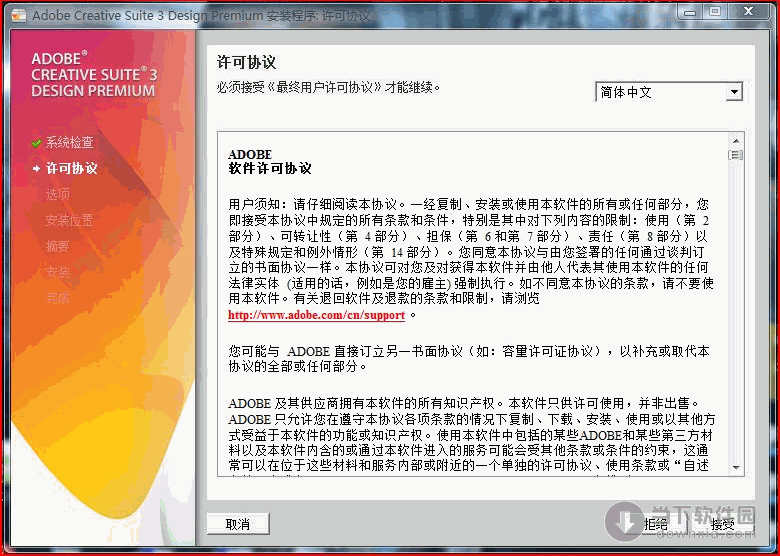
- Before you install, close all applications currently running on your system;including other Adobe applications, Microsoft Office applications, and browser windows.
- Do one of the following:
- Windows:
- Insert the DVD in your drive, and follow the on-screen instructions. If the installer does not launch automatically, navigate to the Adobe CS3 folder found at the root level on your disk and double-click Setup.exe to start the installation process.
- If you downloaded the software from the web, open the folder, navigate to the Adobe CS3 folder, double-click Setup.exe, and then follow the on-screen instructions.
- Mac:
- Insert the DVD in your drive, and follow the on-screen instructions. If the installer does not launch automatically, navigate to the application folder found at the root level on your disk and double-click Setup Mac OS) to start the installation process.
- If you downloaded the software from the web, open the folder, navigate to the application folder, double-click Setup, and then follow the on-screen instructions.
Note: In order to install additional components or reinstall your software after your original installation, you will need access to the original installer (CD, DVD or the download from the web). Before you begin additional installations or reinstallations, please make sure the installer is in the same drive or location it was during the original installation.
- Before you uninstall, close all applications currently running on your system;including other Adobe applications, Microsoft Office applications, and browser windows.
- Do one of the following:
- In Windows XP, open the Windows Control Panel and double-click Add or Remove Programs. Select the product that you want to uninstall, click Change/Remove, and then follow the on-screen instructions.
- In Windows Vista, open the Windows Control Panel and double-click Programs and Features. Select the product that you want to uninstall, click Uninstall/Change, and then follow the on-screen instructions.
- IMPORTANT: Mac OS has new uninstall functionality. DO NOT drag applications to the trash to uninstall them. To safely uninstall on Mac OS X, double-click the product installer in Applications/Utilities/Adobe Installers. Authenticate as an administrator, then select Remove Components and follow the on-screen instructions.
- In Windows XP, open the Windows Control Panel and double-click Add or Remove Programs. Select the product that you want to uninstall, click Change/Remove, and then follow the on-screen instructions.
Choose Activate from the Help menu and follow the on-screen instructions.
Note: If you decide to purchase a different product than you installed for the trial, you may need to uninstall and reinstall the software. For example, if you download and install a trial of Adobe Creative Suite 3 Design Premium, but you decide to purchase only Adobe Illustrator, you will need to uninstall the trial version of the Suite before installing the standalone version of Illustrator that you purchased. For more detailed information, visit www.adobe.com/go/tbinfo
Volume licensing customers cannot purchase from a trial directly. After evaluating a Creative Suite 3 product, you must uninstall the trial and install the product using the volume licensing media and serial number. Refer to the Uninstall your software section of this document for instructions. Please contact your reseller or authorized Adobe licensing center to place an order for a volume license. To find a reseller in your area, go to http://partners.adobe.com/resellerfinder/na/reseller.jsp.
Adobe software may include electronic license (e-license) management technology to ensure compliance with the Product License Agreement. When present, this technology prompts you to verify the license of your product within 30 days after you start it for the first time. If prompted, verification is mandatory.
The on-screen prompt may ask you to activate the software. This verification process does not collect, transmit, or use any personally identifiable information. To learn more, visit the Adobe web site at http://www.adobe.com/activation.
Activate software:
- If the Activation dialog box is not already open, choose Help > Activate.
- Follow the on-screen instructions.
Note: If you want to install the product on a different computer, you must first deactivate the software on your computer. To deactivate, choose Help > Deactivate.
When you install your software, be sure to register to get up-to-date product information, training, newsletters, and invitations to Adobe events and seminars. You will also receive a complimentary benefit such as the new Hypatia Sans font and a Dreamweaver Plug-In.
Adobe Cs3 Design Premium For Mac
There are additional fonts on the installation disk. For information on installing these fonts, see http://www.adobe.com/go/learn_fontinstall_en.
Please refer to Adobe Support for additional late-breaking information and known issues for all Creative Suite 3 applications. In addition, this site will include additional information about some of the known issues listed below.
Install / Uninstall
- If the Creative Suite 3 Design Premium or Standard Suite is installed over a stand alone version of InDesign CS3 that is already installed at the default location and you activate the Design Premium or Standard Suite via Photoshop CS3, the error message, To complete serialization, please quite and restart Photoshop, will appear during activation. You can quit Photoshop CS3, re-launch and proceed with activation or activate your Design Premium or Standard Suite via another application. (1490967)
- When installing Creative Suite 3 Design Premium or Standard Suite, Adobe Acrobat 7 and Acrobat 3D 7 will be deleted without deactivating the electronic license. (1486561)
- Creative Suite 3 will automatically remove Acrobat 3D (versions 7 or 8) when installing.
If Acrobat 3D 7 is currently installed and you install Acrobat Pro 8 it will be recommended you auto uninstall, however you can disregard this and both will be installed. This means you still have the 3D toolkit installed even though your PDFMaker, PDF Printer etc has been overwritten by version 8.
If Acrobat 3D 7 is currently installed and you install CS3 you will be required to auto uninstall Acrobat 3D 7. If you try to install Acrobat 3D 7 afterwards you receive a message that a later version is already installed and you cannot re-install.
This means you have to decide whether you want Acrobat 8 or Acrobat 3D 7. You could then do a custom CS3 install minus Acrobat which would leave Acrobat 3D. - If you launch Acrobat 8 as the first application following the installation of Creative Suite 3, you will receive the message, You must launch another Creative Suite application. Launch any other program included with Creative Suite 3 to successfully activate. (1361474)
- If you choose to install to an external flash-based drive, you will receive an error message. The Creative Suite 3 applications can not be installed to external flash-based drives. (1479797)
- The following CS2 applications can not be installed after Creative Suite 3 is installed.
- InDesign CS2, Illustrator CS2, and Acrobat 7 will hard stop when you try to install.
- InDesign, Illustrator, and Acrobat install options will be grayed out if you try to install Creative Suite 2 Premium.
- Please note some files will remain on your system following an uninstall of Creative Suite 3 applications. For a complete list, please refer to the Adobe Support site.
- If you cancel out of the installation then try to install again immediately after you canceled out of the first attempt, you will receive the following message, Setup has encountered an error and can not continue. Contact Adobe Customer Support for assistance. Go to Task Manager and Exit the installation. Then attempt the install again. (1499293)
- If a color profile, which is marked as permanent, is installed then uninstalled, the entry in WINDOWSSystem32spooldriverscolor files will be removed. If the profile is installed again, the entry will not be restored. The profile must be manually installed. Find the file in the system location, right click on the file and click on install profile. Windows only. (1505021)
- When you install any edition of the Adobe Creative Suite 3 family or a CS3 component on Windows, Bonjour for Windows will be installed as a service on the machine. Bonjour for Windows is Apple networking software which is used by Adobe Version Cue CS3 client applications to dynamically discover Version Cue Servers on the local network.The Bonjour Printer Wizard and Bonjour plug-in for Internet Explorer are not installed as part of Adobe Creative Suite 3 or CS3 component installation. (1510022)
Flash CS3 Professional
- Adobe Flash CS3 Professional does not recognize the four digit extension, .jpeg, during import. Rename the file with a .jpg extension, choose All files *.*, or type *.jpeg in the file name text box in the 'Import to Library' window. Windows only. (1497065)
Working with Bridge CS3, Version Cue CS3, and XMP
- When copying managed files from Bridge CS3 to the local system, copy/paste will not work, however you can drag and drop managed files to the desktop. (1455818)
- If Version Cue CS2 is installed after Creative Suite 3 is installed, the Version Cue Server administration pages cannot be reached because Version Cue CS3 has captured port 3703. During installation of Version Cue CS2 a warning appears that the 3703 port is already taken, and the system should be adjusted. To set up the system to properly access the Version Cue Server, uninstall Version Cue CS3, reinstall Version Cue CS2, and reinstall Version Cue CS3. (1493658)
- When working in Bridge CS3, metadata can not be saved to an .svg or .svgz file when modifying metadata in the File Info window. (1485937)
- Stacks are not saved in Version Cue projects after Bridge CS3 is closed and re-launched. Image Stacks are local and cannot be shared in Version Cue projects. Image Stacks created on local drives will not be lost when Bridge CS3 is closed and re-launched. (1481693)
- Version Cue is not accessible via Dreamweaver CS3, Fireworks CS3, and Contribute CS3. (1475466)
- Version Cue server backups can not be reloaded to restore a server if the server has been reinstalled. This only happens if you use the Control Panel to move the data and backup folders from the default location to somewhere else. In this case to fix the issue you can manually copy from your moved location to the default Version Cue Server install location. Mac OS only. For additional details on this issue, please refer to the Adobe Support site. (1465792)
- Copy/Paste is grayed out and you can not drag/drop from Version Cue projects in Bridge to the local file system. If there are no local project files, you are unable to drag and drop directly from Version Cue projects to the local file system. You must first synchronize the files or from within Bridge, drag and drop the files to the local system short-cuts found either in the Favorites panel or the Folders panel. Synchronize, and then use the replicas. (1455818)
- Microsoft Vista Virtual Folders are not supported in Bridge CS3.
Acrobat 8 Professional
- Working in Acrobat 8, you are not able to create a .pdf file from InDesign CS3. The .pdf file can be created by working directly in InDesign and exporting to .pdf. (1397649)
Customer Service
Adobe Customer Service provides assistance with product information, sales, registration, and other non-technical issues. To find out how to contact Adobe Customer Service, please visit Adobe.com for your region or country and click on Contact.
Support Plan Options and Technical Resources
If you require technical assistance for your product, including information on free and paid support options and troubleshooting resources, more information is available at http://www.adobe.com/go/support/. Outside of North America, go to http://www.adobe.com/go/intlsupport/. Free troubleshooting resources include Adobes support knowledgebase, Adobe user-to-user forums and more.
If you are having any issues with installing or uninstalling any of your Creative Suite 3 applications, please try rebooting your system prior to contacting Support.
Adobe Cs3 Design Premium For Mac
Documentation
Order printed documentation at www.adobe.com/go/buy_books.
Online Resources
Creative Experience
Adobe Design Center
Developer Center
User Forums
Training
Adobe Certification Program
| Adobe Acrobat 8 Professional | Adobe Illustrator CS3 |
| Read Me | |
| New Features | |
| Adobe Bridge CS3 | Adobe InDesign CS3 |
| New Features | Read Me |
| New Features | |
| Adobe Device Central CS3 | Adobe Photoshop CS3 Extended |
| Read Me | Read Me |
| New Features | New Features |
| Adobe Dreamweaver CS3 | Adobe Version Cue CS3 |
| Read Me | Read Me |
| New Features | New Features |
| Adobe Flash CS3 Professional | |
| Read Me | |
| New Features |
Adobe Photoshop Cs3 Design Premium Free Download
2007 Adobe Systems Incorporate. All rights reserved.
Twitter™ and Facebook posts are not covered under the terms of Creative Commons.
Adobe Cs3 Design Premium
Legal Notices | Online Privacy Policy